Within a few decades of the printing press, Bibles began to carry printed pictures.
AI-generated image, not a photograph of a real person or place.
Here is how those pictures were made: woodblocks that went from printer to printer, copper plates that needed a press of their own, and the wood engravings of Gustave Doré. It is a story about book-making and art, told from library collections.
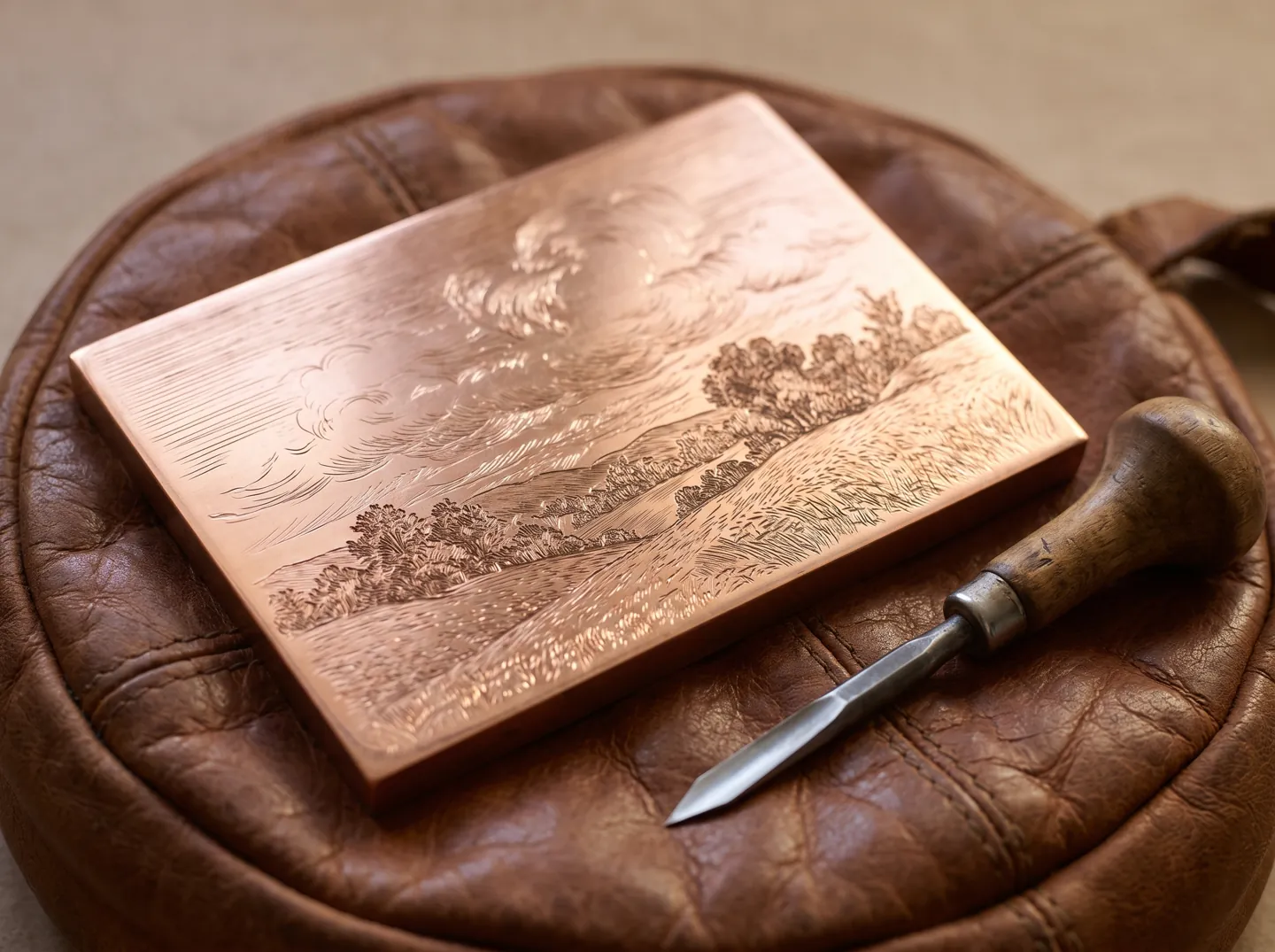
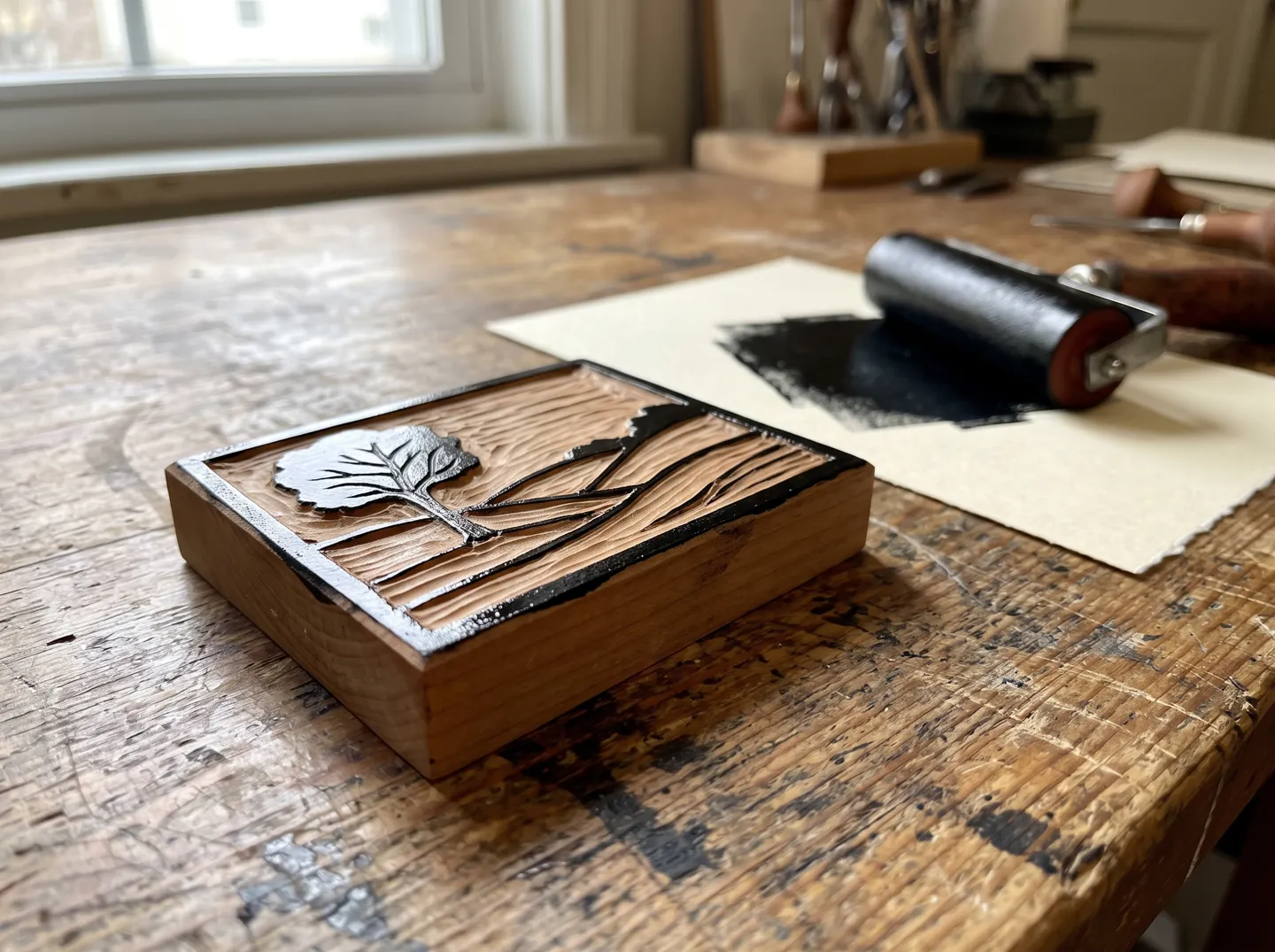
Woodcuts sat in the page with the type. Engravings gave finer detail, at a price.
THE FIRST PICTURES
Initials, then scenes
The first illustrated printed Bible is thought to be Günther Zainer's in Augsburg, given to a monastery in 1474, with 73 woodcut initials. A Cologne Bible of about 1478 added 113 large woodcut scenes.
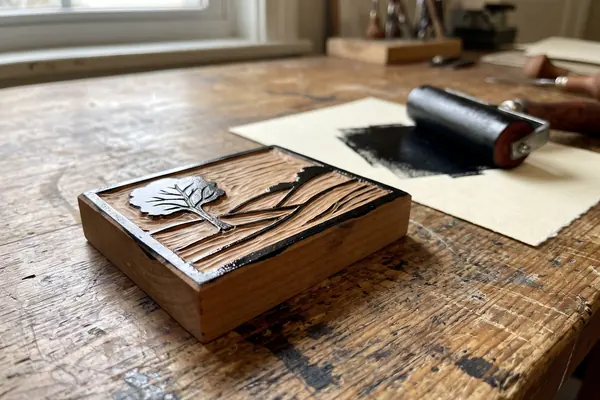
A woodcut is cut in relief, so it could be printed with the type on the same press. Printers liked hard, fine-grained box or pear wood, and well-kept blocks were handed down.
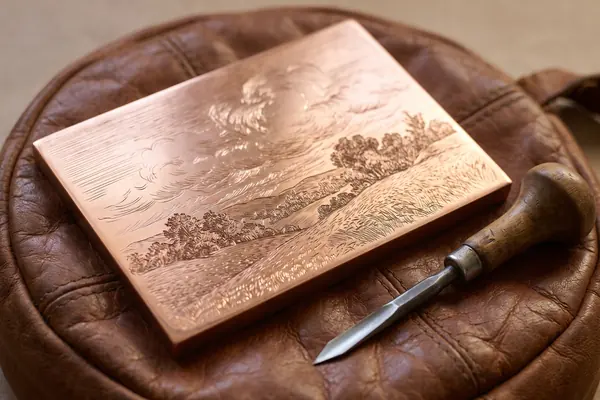
Copper engravings added detail and depth, but the plate had to go through a separate rolling press, which cost time and money and wore the plate down quite quickly.
Pick a method to see how it worked. The bar shows how much extra printing work it added to an ordinary page of black text.
Based on the King's College London exhibition From woodcut to photograph and Bridwell Library's notes on Plantin's 1583 Bible.
TWO NUMBERS WORTH KNOWING
Blocks that travelled, pictures by the hundred.
One figure on how long a woodblock could last, one on the scale of a nineteenth-century picture Bible.
109 of 113
Cologne woodblocks reused in a Nuremberg Bible
Of the 113 woodcuts in Heinrich Quentell's Cologne Bible of about 1478, 109 blocks were bought by Anton Koberger for his German Bible of 1483. Some, worn from use, still appeared in German Bibles well into the 1500s.
WOODBLOCKS · BRIDWELL LIBRARY
241 pictures
Wood engravings in La Grande Bible de Tours
Gustave Doré's two-volume Bible, published by Mame in Tours with an English edition by Cassell, carried 241 illustrations. Doré drew the designs; at his busiest about 40 block-cutters cut his drawings into wood.
DORÉ · 1866
Doré's Bible was a great success: a major exhibition of his work followed in London in 1867, which led to the Doré Gallery in Bond Street.
FOUR THINGS TO LOOK FOR
Read an old picture like a printer.
You can often tell how an illustration in an old book was made just by looking closely, in a library, a museum or a digitised copy.
AI-generated image, not a photograph of a real person or place.
Step 1
Look for a plate-mark
A copper engraving pressed into damp paper usually leaves a faint rectangular dent around the picture. A woodcut, printed level with the type, leaves none.
Step 2
Check the lines
Woodcuts tend to have bolder, simpler black lines. Engravings show finer detail, and wood engravings build tone from white lines on dark ground.
Step 3
Spot the repeats
Printers reused blocks. In the Halberstadt Bible one woodcut of St Jerome appears nearly twenty times, so the same picture can turn up again and again.
Step 4
Read left to right
Many early woodcuts show more than one moment of a story in one frame, like a stained glass window, with people in the clothes of the printer's own day.
WHY PICTURES MATTERED
Stained glass on paper.
AI-generated image, not a photograph of a real person or place.
King's College London notes that in northern Europe, where stained glass had long told Bible stories to congregations, many illustrated Bibles were printed in the first century of printing. Pictures were especially common in Bibles in everyday languages, helping readers less used to long pages of print.
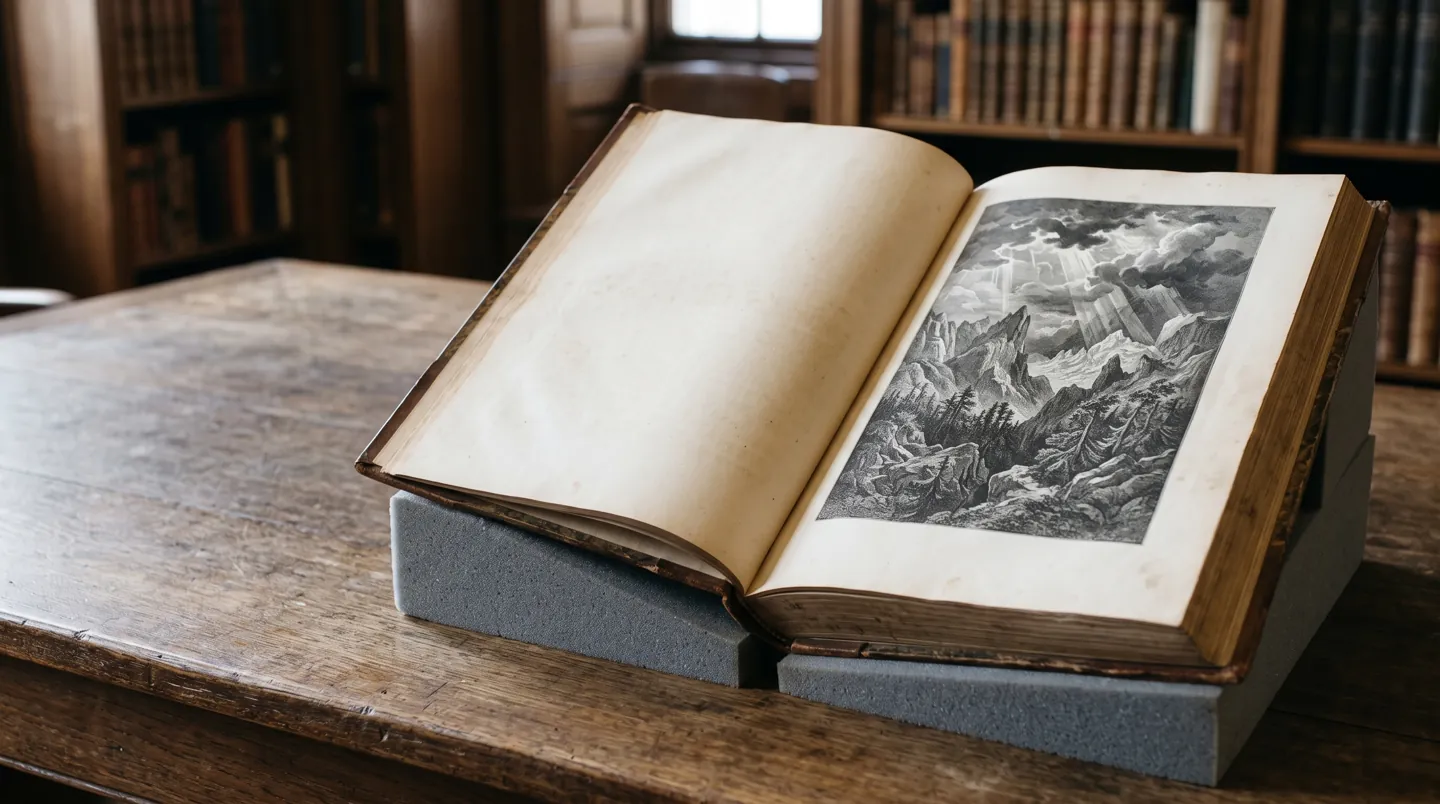
Later centuries changed the look. Christophe Plantin's 1583 Antwerp Bible carried nine full-page engraved plates, maps and 82 smaller pictures, and nineteenth-century Bibles often copied famous old master paintings, bringing them to readers who would never see the originals.
Questions
Questions on the way
Which was the first printed Bible with pictures?
Bridwell Library says it is believed to be Günther Zainer's German Bible from Augsburg, which he gave to a monastery in 1474. That is in the third decade after Gutenberg's invention of printing with movable type in Mainz.
What is the difference between a woodcut and an engraving?
A woodcut is cut in relief on a block, so the raised lines take the ink and it prints with the type. An engraving is cut into a metal plate, the ink sits in the grooves, and it needs a separate rolling press.
Why were the same pictures used in different Bibles?
Woodblocks were valuable and could last for years. Anton Koberger bought 109 Cologne blocks for his 1483 Bible, and the Halberstadt Bible took many of its 136 woodcuts from blocks used for the Cologne Bible.
Did Gustave Doré cut his own blocks?
Usually not. He was normally the designer, and at the height of his career about 40 block-cutters turned his drawings into wood engravings, often signing the image as well.
Were the old woodcuts in colour?
They were printed in black, but some copies were coloured by hand. Bridwell Library's leaf from the Cologne Bible is hand-coloured, and its copy of Koberger's 1483 Bible adds gold leaf.